
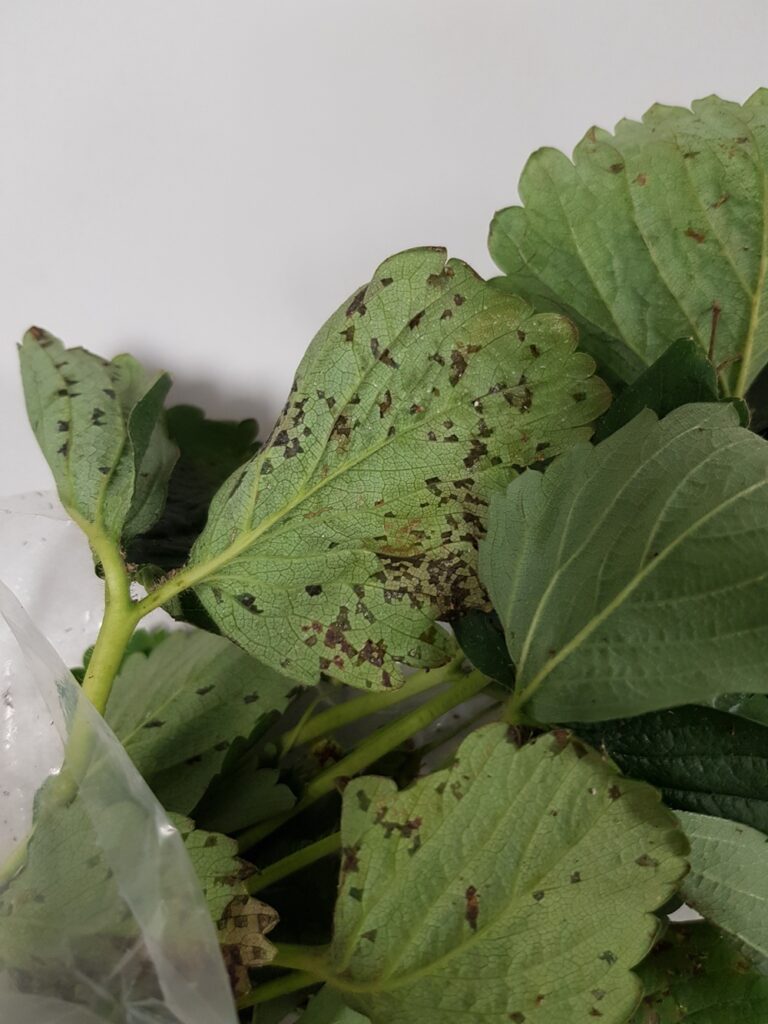
A few years ago, strawberry plants of a well-known cultivar were propagated under controlled conditions. Inspections during the season found nothing unusual — clean mother plants, a new tray field, no water recirculation, and routine checks all gave the green light.
Yet once plants were distributed, a puzzling pattern emerged. Some growers reported heavy outbreaks of Xanthomonas fragariae, while others with plants from the very same source saw little to no issue.
Why such a difference? The answer lies not only in the presence of the bacterium, but in the growing environment that favors its development.
- The bacterium enters leaves through stomata and thrives in high humidity with free moisture on foliage.
- Temperatures of 18–24 °C accelerate its growth.
- Young, tender leaves are especially vulnerable.
- High nitrogen fertilization makes plants lush, but also more susceptible.
- Water splash and crop handling can move the bacterium from plant to plant.
In some fields, these conditions lined up perfectly — turning a hidden, symptomless infection into a rapid epidemic. In others, the environment was less favorable, and the disease failed to establish.
Management lessons from this case:
- Even when plant material appears “clean,” opportunistic pathogens can strike if conditions align.
- Strict sanitation, careful nitrogen management, and minimizing leaf wetness are essential preventive steps.
- Early detection through scouting and diagnostic testing helps prevent widespread spread.
The key insight: Xanthomonas infections are as much about the crop’s environment as about the pathogen itself. A clean start is important, but staying clean requires vigilance against the growing conditions that give the bacterium its opportunity.