Excess Hydrogen Peroxide Is a Major Stress Factor
Interviewed by: Ank Van Lier. For: Onder Glas nr 1, January 2026
Fusarium frequently appears in pepper cultivation in drain water, the root system, or the substrate. Recent research shows that the presence of fungal spores does not always lead to problems or plant loss. Whether damage occurs largely depends on the stress level of the crop. One important culprit appears to be the use of stabilized hydrogen peroxide.
Fusarium has caused problems in pepper cultivation for several years. “This fungus leads to significant yield losses in production,” says Petra van der Goes of Plant Quality Solutions. She describes herself as a “forensic expert” in plant health and focuses on uncovering the underlying causes of crop problems.
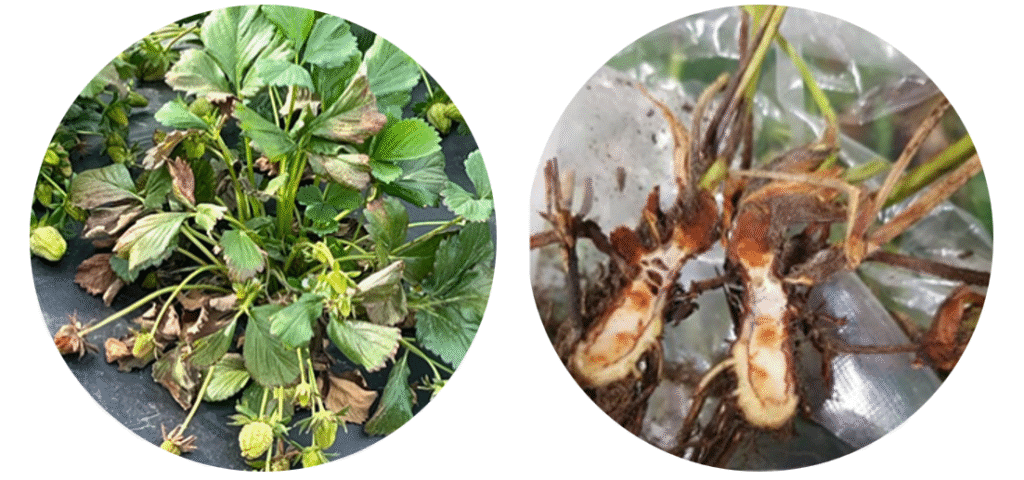
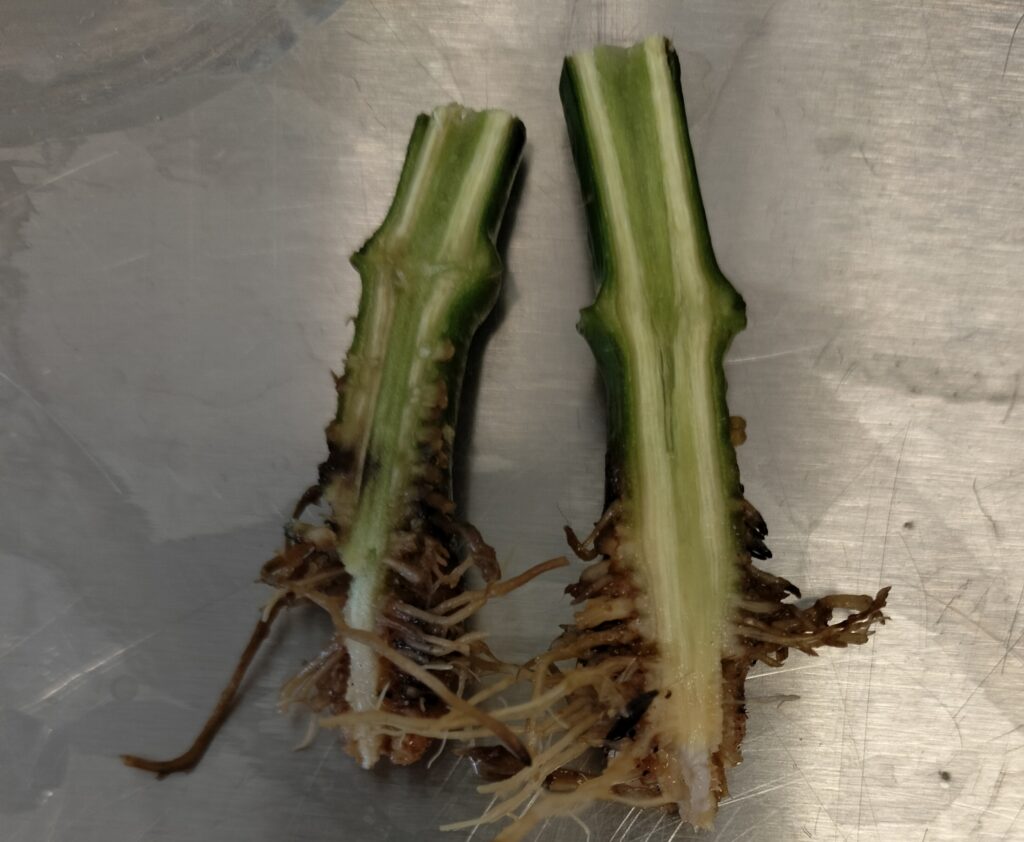
In the case of Fusarium in peppers, Van der Goes observed something unusual last year. At one production site, she detected Fusarium spores in the drain water, root system, and substrate without the pepper plants showing any disease symptoms. “At another company where spores were found, wilting did occur, but not in the way typical for Fusarium. The roots were evenly light brown, while the central part of the roots was clean. In a Fusarium infection, this central tissue is also discolored. In addition, Fusarium can cause vascular bundles to become blocked, disrupting water transport. That was not the case here. Moreover, the plants were able to recover after adjusting the disinfection method, which is not possible with Fusarium. All of this raised many questions, and I wanted to find answers.”

Fungal Spores, No Problems
At the beginning of this year, the plant expert therefore set up her own research. She was able to use the laboratory facilities of Valto Biocontrol, and propagation companies and growers also contributed financially. “My research showed, among other things, that Fusarium spores were regularly present in seed, but that young plants did not become diseased as a result.”
Even after the young plants were placed in a substrate, problems did not occur in most cases. Van der Goes conducted trials with pepper plants on rockwool, coconut, and a peat-based mix. “Although no disease symptoms appeared, I did find Fusarium spores in the drain water, the roots, and the substrate in all these cases.”
ABA and DKPs
At a certain point, however, things did go wrong with the pepper plants grown on rockwool. After a sudden change in weather, a typical Fusarium wilt developed. To explain this, the researcher had a drain water sample analyzed. “The results were striking. The sample contained high concentrations of abscisic acid (ABA). This stress hormone slows growth and regulates water balance. Plants produce this hormone when they experience stress, in this case due to the weather change. As a result, the plant becomes less resilient and sheds tissue, which explains the brown discoloration of the roots.”
In addition to the high levels of stress hormones, there was also a high concentration of diketopiperazines (DKPs). “These secondary metabolites disrupt the hormonal balance in the root zone and are therefore negative for plant growth. The plant itself produces a small amount of DKPs, but most of these metabolites are produced by microorganisms. The Fusarium fungus, among others, produces DKPs, and their production increases when the plant is under stress. These secondary metabolites, in turn, stimulate the production of the ABA stress hormone.”
Stress as a Trigger
The conclusion Van der Goes drew from this was that the presence of Fusarium does not always have major consequences for plant vitality. In other words, plants do not necessarily collapse when fungal spores are detected. “The fungus is often merely a passive inhabitant of the root zone and not always biologically relevant, as we call it. That only becomes the case when the crop is exposed to stress situations. Stress is the trigger for the development of problems and damage caused by Fusarium.”
According to Van der Goes, this creates a vicious circle. The higher the stress level, the more sugars the plant exudes through its roots. “These so-called ‘leaking’ sugars then form a nutrient source for microorganisms in the root system, such as Fusarium. This stimulates the fungus to become more active. If, during the fruiting phase, a high fruit load is added on top of this, it is often the final straw, and the crop loses its vitality and wilts.”
Too Much Hydrogen Peroxide
Why, then, have there been so many Fusarium problems in pepper cultivation in recent years? Which stress factors are responsible? “One major cause is that many pepper growers have significantly increased the use of stabilized hydrogen peroxide for disinfection, due to the loss of crop protection products and in an effort to keep Fusarium under control. However, hydrogen peroxide is an aggressive oxidant that causes considerable stress to the crop, especially on rockwool. With organic substrates, the problem is less severe because they can break down the peroxide more effectively. This partly explains why Fusarium problems are more pronounced on rockwool.”
In addition, the previously mentioned DKPs, which are also negative for plant growth, reach the plant more quickly in rockwool than in organic substrates. “This is because rockwool is an inert substrate, meaning DKPs bind less readily to other microorganisms.”
Closed cultivation systems also cause stress for the plant, Van der Goes notes. “Through recirculation, residues and negative elements such as DKPs are continuously circulated. You cannot get rid of them, and their concentrations build up. Pepper plants do not thrive under those conditions either.”
Preventing Stress
To prevent problems, it is therefore essential to keep the stress level of pepper plants as low as possible. But how can growers do this? “Limit the use of hydrogen peroxide as much as possible. It does more harm than good. We also need to move away from the idea that water must be 100 percent clean.”
She also advises enriching the substrate microbiome with biostimulants and biofungicides, which increases the crop’s resilience against the fungus. “It is especially important to have a high diversity of microorganisms present in the microbiome.”
Caution is also advised when reusing substrate. “Not only with rockwool, but also with, for example, coconut and peat-based substrates. Fusarium spores are present there as well and can build up with reuse.”
Fusarium-Free Seed as the Ultimate Solution
Finally, Van der Goes advises ensuring optimal crop management. “By that I mean supporting the plant when needed. If, for example, a major weather change is coming, provide extra amino acids and plant extracts to help the plant cope. This improves stress tolerance and reduces the likelihood that Fusarium spores will lead to problems.”
According to the researcher, the ultimate solution lies in seed that is free of Fusarium spores. “But that is difficult, because seed suppliers do not feel a sense of urgency. After all, the spores are not biologically relevant in young plants, as my trials also showed. As a result, seed companies do not see the need to address this issue.”
Summary
Fusarium spores are common in pepper cultivation, but research shows that damage only occurs when plants experience stress. In particular, high doses of stabilized hydrogen peroxide are a major stress factor, and recirculation also has a negative effect. Limiting the use of hydrogen peroxide, maintaining a diverse substrate microbiome, careful handling of substrate reuse, and good crop management can help prevent and reduce problems.