
We tend to think of plants as passive. In truth, they’re broadcasting signals all the time. We just have to tune in.
Brix as an early-warning signal
How sugar concentration reflects photosynthesis and plant energy.
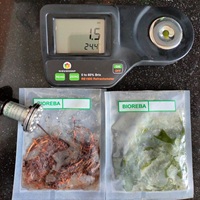
Role of sugars in plants
Sugars in plants are formed through photosynthesis, a process where plants use light energy, water and carbon dioxide to create glucose and oxygen. Here is how it happens:
Formation of sugars in leaves: the process occurs in the chloroplasts of plant cells, primarily in leaves. Light is absorbed by chlorophyl, the green pigment, and converst carbon dioxide and water into glucose and oxygen. During daytime, the about of sugars formed is highest between 2 pm and 4 pm.
After glucose is produced in the leaves, it is often converted into sucrose (a disachharide sugar( for transport through the plant. Sucrose ios more stable and can be moved mopre efficiently over long distances.
Sucrose is tranpotered through the phloem vessels to different parts of the plant, including roots, stems, flowers, and growing parts. This movement is driven by pressure differences between source (leaves) and sink (growing tissues) areas.
Some of the sugars may be stored in roots or other storage tissues as starch, which can be converted back to sugar when needed.
Sugars are used for energy in respiration, a process that breaks down glucose into energy (ATP) that powers cellular activities, including growth.
Sugars also serve as building blocks for other compounds like cellulose, which makes up the cell wall, or amino acids, which are used to build proteins. This is crucial for the growth of new tissues, including leaves, stems, and flowers.
Brix is a scale used to measure the concentration of dissolved sugars in a liquid, particularly in plant sap or fruit juice. It represents the percentage of sucrose by weight in the solution.
VOCs – scent messages
Plants emit volatile organic compounds to warn neighbors or call in help.
Plants have developed sophisticated communication mechanisms to respond to environmental stimuli, interact with each other, and even defend against threats. Two major ways plants send messages are through volatile organic compounds (VOCs) released into the air and root exudates released into the soil.

How VOC’s work….
When a plant is under stress, such as from herbivore attack, mechanical damage, or environmental stress, it may release VOCs into the atmosphere. These compounds can be emitted by leaves, stems, or flowers. There are different types of VOC’s
Herbivore-Induced Volatiles: These are released when a plant is grazed or damaged by herbivores. They act as distress signals to nearby plants, which may then activate their own defense mechanisms (e.g., producing chemicals to deter herbivores or attract natural predators of herbivores).
Plant-Plant Communication: Plants can also release VOCs that alert nearby plants about environmental changes, like drought or temperature stress, allowing neighboring plants to initiate protective responses.
Attracting Pollinators: Some plants release pleasant-smelling volatiles to attract pollinators like bees, butterflies, or birds.
VOCs act as airborne signals that are detected by receptors in other plants or organisms (like insects). These signals can trigger defence responses and attract beneficial organisms, providing an indirect defence mechanism.
Root exudates
Plants use soil chemistry to communicate with microbes and other plants.
Root exudates are compounds released by plant roots into the surrounding soil. These exudates are a form of communication with the soil microbiome, other plants, and even herbivores.
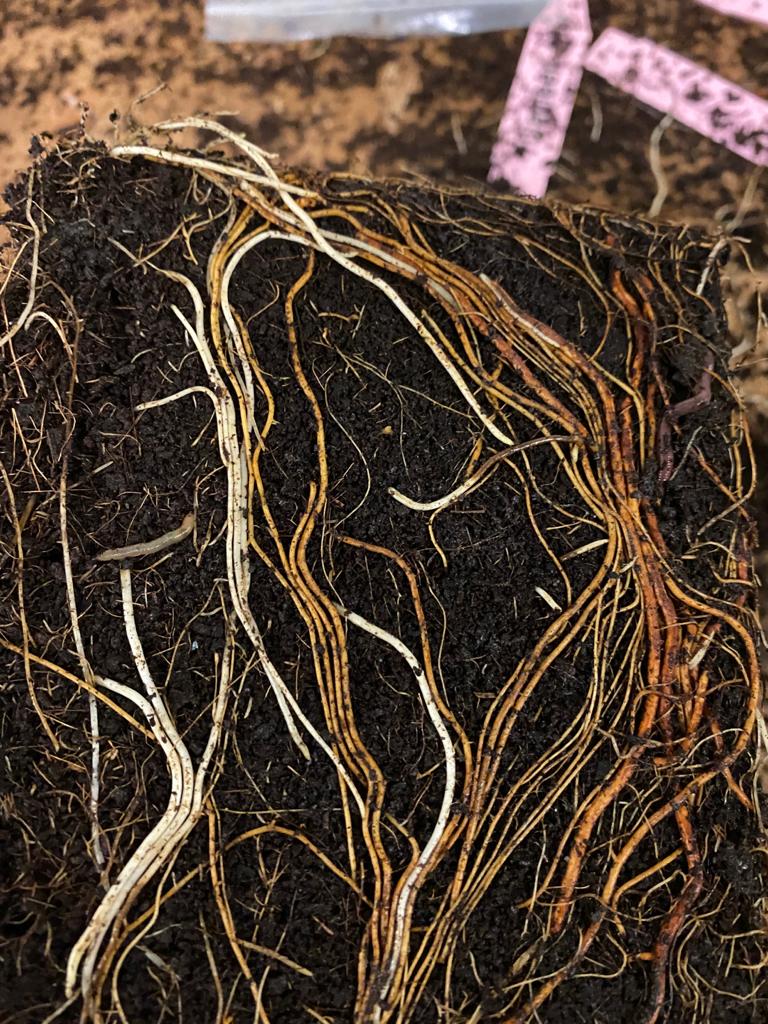
How root exudates work….
Roots excrete a variety of substances, including sugars, amino acids, organic acids, phenolic compounds, and secondary metabolites. This process can occur under normal conditions or in response to specific stimuli (like pathogen attack or nutrient deficiency).
Nutrient-Rich Compounds: Plants excrete sugars, amino acids, and organic acids to nourish beneficial microbes like mycorrhizal fungi, which help with nutrient uptake (especially phosphorus).
Allelopathic Compounds: Some plants release chemicals into the soil that inhibit the growth of nearby plants, reducing competition for resources (this is known as allelopathy).
Signal Molecules: In response to pathogens or other stressors, plants may release signaling molecules (like jasmonic acid or salicylic acid), which influence the microbial community around their roots and help in activating defense pathways.
Plants don’t only use one form of communication – they often use both. An example: when plants release VOC’s in response to herbivory, these signals can also affect microbial populations in the soil around the roots, increasing the plant’s resistance to pathogens or pests.
Electrical signalling
Plants send action alerts from leaf to leaf, preparing tissues for defence.
While volatiles and root exudates are primarily chemical signals, they can be translated into electrical signals through the plant’s biochemical processes. The key translation happens through ion fluxes across cell membranes, which alters the plant’s electropotential and generates electrical currents that propagate through the plant. These electrical signals are crucial for the plant’s response to environmental changes, herbivory, and pathogen attacks, allowing it to activate defense mechanisms or adjust growth processes accordingly.
Practical takeaway for growers
Start tracking brix levels and noting changes in plant appearance before visible damage. Even small shifts can mean stress.
“A plant in distress is never silent — the skill is in learning its language.”